




Testing budgets are under pressure everywhere. Yet when teams cut QA the wrong way — fewer testers, skipped test cycles, deferred automation — defects escape to production and cost far more to fix than they would have in a sprint. Understanding the full defect management process helps teams see exactly where those extra costs accumulate. The good news: there are smarter ways to reduce QA costs. Not by doing less testing, but by doing it more efficiently.
Why QA costs get out of hand
QA expenses spiral for a few predictable reasons. Manual testing is labor-intensive by nature. A QA team running a full regression suite before every release can spend days on repetitive work — clicking through the same flows, filling the same forms, checking the same outputs. Multiply that by every sprint and the labor costs compound fast.
Hidden costs make it worse. Duplicate test cases nobody cleaned up. Test environments that sit idle 80% of the time but still cost money. Automation frameworks nobody maintains until they break. Defects that slip through to production and require emergency patches at the worst possible time.
According to the NIST, the cost of fixing a bug found in production is roughly 30 times higher than catching it during development. The goal of reducing QA costs isn’t to spend less on testing. It’s to spend less on the wrong testing while catching defects earlier.
How test automation reduces QA costs
Test automation is the single most effective lever for long-term cost reduction in QA. A well-maintained automated test suite runs in minutes what would take your manual testing team hours or days.
The math is straightforward: if a QA engineer spends 6 hours running a regression suite manually, and you run that suite twice a week across 50 sprints a year, that’s 600 hours per year on one engineer’s time. Automate it once, and that work drops to a few minutes of CI pipeline time. The upfront costs of building automated test scripts pay back fast.
The catch is “well-maintained.” Automation testing tools that aren’t integrated into your development process create their own labor costs. Scripts go stale. Flaky tests generate false failures that someone has to investigate. Your automation framework needs to live close to the code — not in a separate tool that nobody opens unless something breaks. Frameworks like Playwright are built for exactly this kind of tight CI integration.
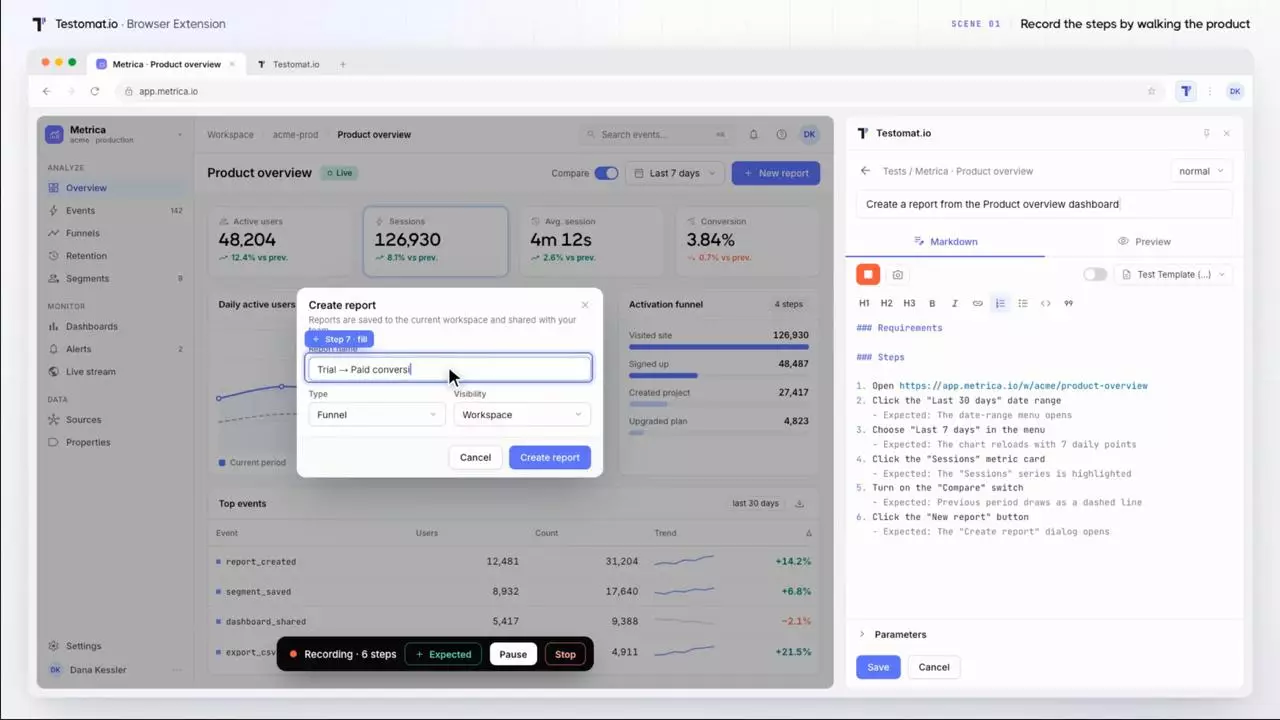
Platforms like Testomat.io sync automated tests directly from your source code, so your test management system always reflects what’s actually in the repo. That cuts the maintenance overhead that drives up QA expenses over time.
Risk-based testing: stop testing everything
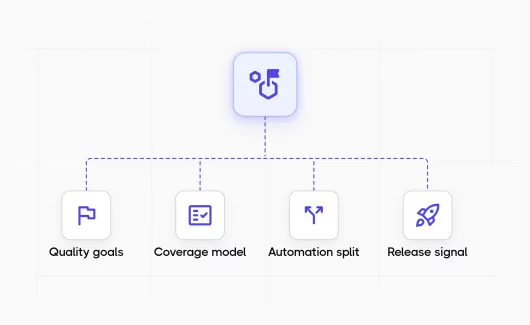
One reason testing costs stay high is that teams test too much or test the wrong things. Risk-based testing is the practice of prioritizing test coverage based on where defects are most likely to appear and most likely to cause damage a core idea in risk management in software testing .
Not every feature needs the same depth of testing. A new payment flow carries far more risk than a tooltip label change. A module that changes every sprint deserves more attention than a stable component untouched for six months.
To apply risk-based testing in practice:
- Map your software product’s functional areas and their change frequency.
- Assign risk levels based on business impact and historical defect rates .
- Allocate your testing efforts — manual and automated proportionally.
- Review the map each sprint as priorities shift.
This approach doesn’t reduce test coverage in any meaningful sense. It redirects QA work to where it matters. Teams that do this consistently report significant reductions in QA costs without compromising on quality, because they stop spending cycles on areas where defects almost never occur.
How to reduce the cost of regression testing
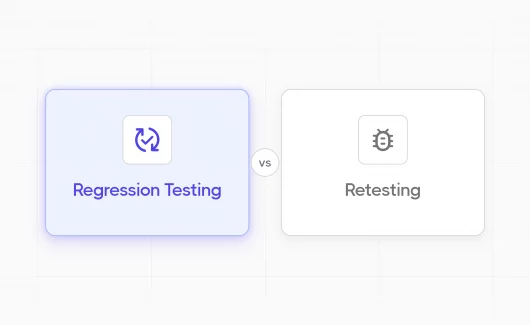
Regression testing is where QA budgets go to die. Every release needs it. Every feature change risks breaking something existing. And if your regression suite is mostly manual, it’s a recurring labor cost that scales with your codebase, not your team’s efficiency.
Three ways to reduce the time and costs of regression:
- Automate your regression suite first. Regression tests are the best candidates for automation because they’re repetitive by definition. The same tests, every time. Write them once, run them continuously.
- Prioritize regression by change impact. You don’t need to run every test for every change. If your CI pipeline knows what changed, it can trigger only the test cases relevant to those modules. This is sometimes called selective test execution, and it can cut regression run times dramatically. Pair it with quality gates to block deployments automatically when critical tests fail.
- Kill flaky tests before they multiply. A test that fails 30% of the time for no clear reason is worse than no test at all, it erodes trust and generates investigation work. Treat flaky test detection as a maintenance task, not an afterthought. Tools that automatically flag tests alternating between pass and fail help you catch these before they drive up your labor costs.
Testomat.io’s test execution features track run history per test, surface flaky patterns automatically, and let you relaunch only the failed subset, saving the next run from repeating work already done.
Reusable test cases and templates
Every time a QA professional writes a test case from scratch that already exists somewhere else in the project, that’s wasted time. Duplicate test cases also create maintenance costs: when a flow changes, you update one copy and miss three others.
Reusable test steps (sometimes called snippets or shared steps) let you define common sequences once — a login flow, a payment entry, a form submission — and reference them across many test cases. Change the snippet once, and every test case using it updates automatically.
Built-in test case templates extend this further. For teams testing similar features repeatedly (CRUD operations, API endpoints, permission checks), templates give QA engineers a starting point rather than a blank page. This speeds up test creation and keeps test cases consistent, which makes them easier to review and maintain.
Testomat.io’s template and snippet features are designed for exactly this. They reduce the time QA engineers spend on repetitive test writing and keep your test suite clean as it grows.
Cut QA costs with better tooling
One underappreciated source of hidden costs is tool sprawl. Teams that maintain separate systems for manual test case management, automated test reporting, and defect tracking spend time copying data between them, reconciling discrepancies, and training new people on multiple platforms.
A unified testing platform that handles both manual and automated tests in one place eliminates that overhead. Your QA team stops maintaining two sources of truth. Your developers stop asking which system has the current test results. Your stakeholders get one test report instead of three.
The cost comparison matters too. TestRail charges $36/month per user (Professional plan) and treats automation as an add-on concern. Zephyr Scale is bundled with Jira licensing and adds another $10–30 per user. With Testomat.io at $30/user/month on the Professional plan — and free read-only access for stakeholders — the total cost of ownership for larger teams is meaningfully lower.
| Tool | Price (per user/month) | Manual + automation unified | Free stakeholder access | AI features |
|---|---|---|---|---|
| TestRail | $36 (Pro) / $69 (Enterprise) | No — automation is separate | No | Limited beta |
| Zephyr Scale | Jira license + $10–30 add-on | Partial | Jira viewer license only | No |
| Allure TestOps | Custom pricing | Yes, with CI focus | Limited | Partial |
| Testomat.io | $30 (Pro) / Custom (Enterprise) | Yes — single platform | Yes, read-only seats are free | Yes, built-in |
When evaluating testing tools, calculate the full picture: license costs, integration maintenance, onboarding time, and how many people need access to reports without needing a full editing seat.
Cloud-based test environments
Test environments are a significant and often invisible cost center. Environments that need to be provisioned manually for each test cycle, kept in sync with production, and torn down afterward consume both DevOps time and infrastructure spending.
Cloud-based test environments solve this by making environment provisioning part of the CI/CD pipeline. If you’re choosing between CI tools, the Jenkins vs GitHub Actions comparison is a useful starting point. Spin up on demand, run tests, tear down. You pay for what you use, not for idle instances waiting for the next test cycle.
The practical impact on QA costs: teams that move to ephemeral cloud environments typically reduce environment-related labor costs by eliminating the “it works on my machine” debugging cycle. Environments are consistent by definition, so test failures reflect actual defects rather than environment drift.
Pairing cloud-based test environments with environment tagging in your TMS lets you track pass rates per environment (staging vs. production, for instance) and catch environment-specific defects before they reach users.
What not to cut
When reducing QA costs, some cuts look attractive on paper but create larger costs downstream.
- Don’t cut unit testing. Unit tests are the cheapest defect-catching mechanism in software development. They run fast, they’re written by developers who already understand the code, and they catch integration testing problems before they become expensive to diagnose. Reducing unit test coverage to save time in the short term drives up defect rates in production.
- Don’t eliminate exploratory testing entirely. Automation excels at verifying known behavior. It doesn’t find the unexpected. Experienced QA testers doing exploratory sessions catch the defects that scripted tests never would, see the roundup of exploratory testing tools worth considering. A right QA strategy keeps some budget for exploratory work even as automation expands.
- Don’t defer test maintenance. A degraded test suite — stale test scripts, outdated test data, ignored failures — is a liability that grows. Teams that skip maintenance cycles to save time end up with automation they can’t trust and manual testing costs that creep back up to fill the gap.
The goal of cost reduction in QA is efficiency, not attrition.
Where to start
Reducing QA costs without compromising software quality isn’t a single decision. It’s a set of ongoing practices:
- Audit your current testing efforts. How much time does your QA team spend on manual regression? How many duplicate test cases exist? How often do you pay for flaky tests that aren’t real failures?
- Automate the repetitive work first. Regression suites, smoke tests , API verification — the cases that run every sprint without changing. Let your QA professionals spend their time on the testing that requires judgment.
- Adopt risk-based prioritization. Not every test needs to run every time. Get intentional about where your coverage matters most.
- Pick tools that reduce overhead, not add to it. Every integration you maintain by hand is a cost. Every platform your team has to context-switch between is a cost.
If you want to see how a modern test management platform changes the economics, Testomat.io offers a free plan with no credit card required and a 30-day trial of all Enterprise features. Start by connecting your existing test suite — it takes about five minutes.